Home / Products / Industrial Activated Carbon Filters
Industrial Activated Carbon Filters
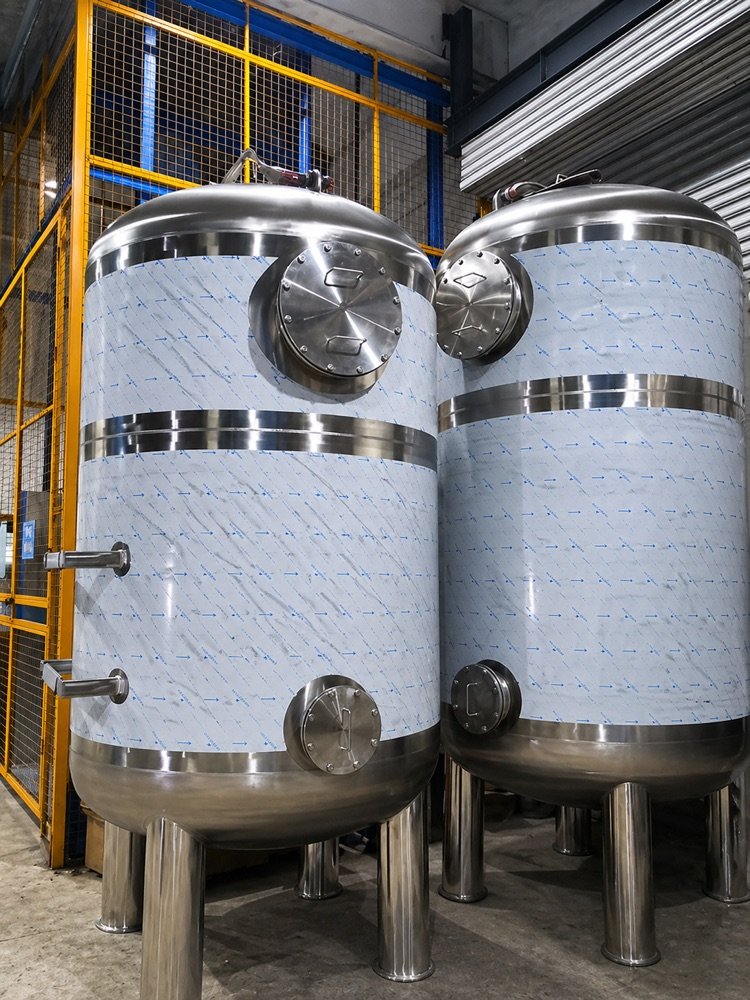
Pressure vessels containing granular activated carbon (GAC) for dechlorination, organic removal, color and odor reduction, and RO membrane protection. Built in 304 / 316L SS, FRP, or rubber-lined CS. Sized 0.5 to 200 m³/h.
Flow Rate
0.5 – 200 m³/h
EBCT
8 – 15 minutes
Carbon Type
Coal / Coconut / Wood-based GAC
Pressure
0.6 / 1.0 / 1.6 MPa
Overview
Activated carbon filters remove dissolved chlorine, chloramines, organic compounds (THMs, VOCs), color, taste, and odor from water. The granular activated carbon bed works by adsorption — contaminants bind to the vast internal surface area (900–1,200 m²/g) of each carbon particle. They are essential pre-treatment for RO membranes, which are degraded by free chlorine, and for food/beverage applications where taste and odor must meet strict standards.
Engineering Features
🧪
Multiple Carbon Types
Coal-based GAC for general industrial and municipal use. Coconut-shell GAC for drinking water and high-purity applications. Wood-based GAC for color/taste removal.
🔩
Same Vessel Options as MF
304 SS, 316L SS, FRP composite, CS + rubber or epoxy lining. Pressure ratings 0.6–1.6 MPa. Manways and sampling ports standard on larger vessels.
⏱
Adequate EBCT Design
We size Empty Bed Contact Time (EBCT) to 8–15 minutes minimum — the correct engineering parameter that ensures actual adsorption rather than mere particle interception.
🔄
Steam or Water Regeneration
On-site steam regeneration option available for large systems where carbon disposal costs are high. Off-site reactivation service coordination available.
📋
NSF 61 Carbon Available
For drinking water and food-grade applications, we specify NSF 61-certified activated carbon meeting US EPA and WHO standards.
⚙️
Automatic Backwash
Timed or differential-pressure-triggered automatic backwash breaks up channeling and restores bed uniformity.
Technical Specifications
Typical Applications
- 💧 RO Membrane Protection — Removes free chlorine and chloramines that degrade polyamide membranes.
- 🥤 Bottled Water & Beverage — Removes THMs, VOCs, taste and odor compounds for product quality.
- 💊 Pharmaceutical Water — Pre-treatment step in USP purified water and WFI systems.
- 🍺 Brewing & Spirits — Conditions feed water to consistent taste profile for consistent product.
- 🏊 Swimming Pool Treatment — Removes combined chlorine (chloramines) for safe bathing environments.
- 🏭 Industrial Process Water — Pre-treatment for ion exchange and EDI demineralization systems.
Frequently Asked Questions
How long does the activated carbon last?
GAC exhaustion depends on contaminant loading. For chlorine removal in municipal water: 6–18 months. Check effluent chlorine monthly. Replace or regenerate when breakthrough is detected.
Coal vs. coconut-shell carbon — what is the difference?
Coconut-shell carbon has smaller micropores (better for small molecules like chlorine/THMs, taste/odor). Coal-based has larger macro/mesopores (better for larger organics, color). We specify the correct type for your water.
Can I run an activated carbon filter in series with a multimedia filter?
Yes — this is the standard configuration: multimedia filter first (removes TSS), then activated carbon (removes dissolved organics/chlorine). Both in series protect downstream RO membranes.
What is the difference between GAC and PAC?
GAC (granular) is used in fixed-bed pressure vessels — easy to operate, low maintenance. PAC (powder) is dosed directly into water — more flexible for variable contamination but requires more handling and creates sludge.
What lead time and shipping?
Standard sizes 20–30 days. Custom configurations 35–45 days. Same containerized shipping as multimedia filters.
Often Specified Together
Multimedia Filters
Cartridge Filter Housings
UV Sterilizers
Need a Custom Industrial Activated Carbon Filters?
Send us your water analysis and required capacity. Our engineers will respond with a sized proposal and budget within 24 hours.
📧 sales@szhrscl.com | 📱 +86 138 2871 5252