Home / Products / Industrial Water Softeners
Industrial Water Softeners
Sodium-form cation exchange softeners removing calcium and magnesium hardness from process water, boiler feed, and RO pretreatment. Single, duplex (continuous), or triplex configurations from 0.5 to 200 m³/h.
Hardness Removal
Inlet up to 800 mg/L → outlet < 0.03 mmol/L
Flow Rate
0.5 – 200 m³/h
Configurations
Single / Duplex / Triplex
Regenerant
NaCl brine, fully automatic
Overview
Water softeners use sodium-form strong acid cation exchange resin (SAC) to replace calcium and magnesium ions (which cause scale) with sodium ions (which do not). Softened water prevents scale formation in boilers, heat exchangers, RO membranes, cooling towers, and piping systems. Hard scale has extremely low thermal conductivity — even 1 mm of scale increases boiler energy consumption by 10–15% and causes tube failures. Softening is the most reliable and cost-effective solution for hardness control.
Engineering Features
🔄
Duplex for Continuous Output
Twin-vessel alternating operation means one vessel is always in service while the other regenerates — zero hardness breakthrough and uninterrupted flow for 24/7 operations.
🧂
Efficient Brine Regeneration
Brine preparation tank with automatic salt dissolution and metering. Counter-current regeneration (for premium resin) maximizes salt efficiency and minimizes wastewater.
📊
Hardness Monitoring
Inline hardness sensors with automatic switchover at breakthrough. PLC logs all regeneration cycles, resin condition, and salt consumption.
🔩
Vessel Construction
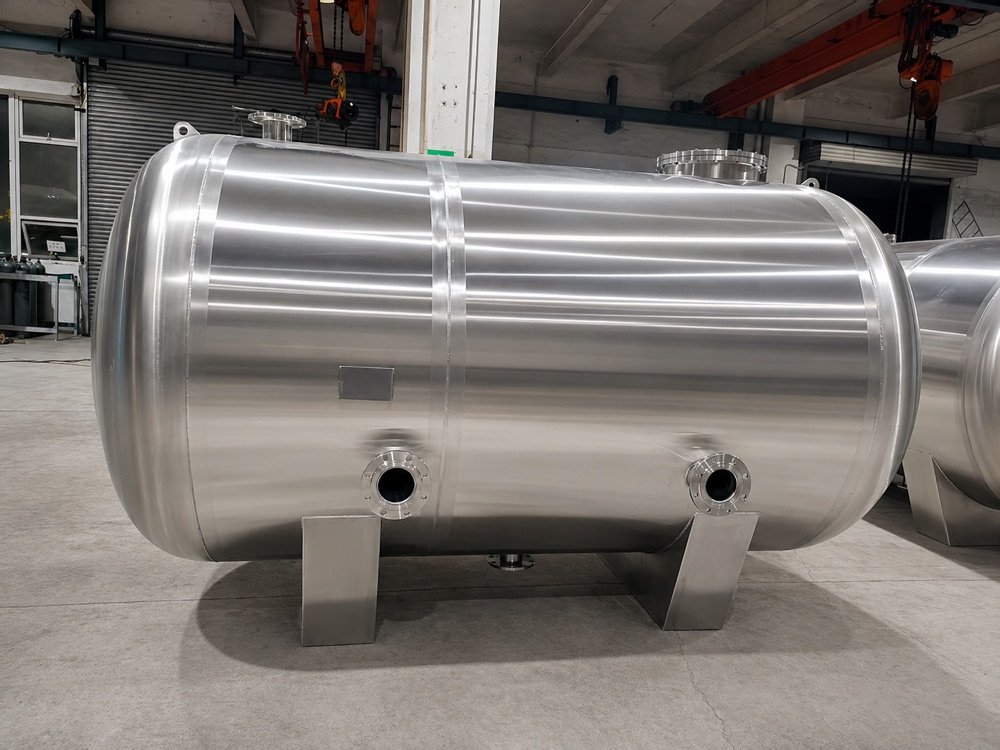
FRP composite (cost-effective for standard service) or 304/316L SS (food, pharma, hot water applications). Vessel sizes 300 – 2,500 mm diameter.
⚙️
Automatic Operation
Fully automatic on time, volume, or hardness trigger. Remote monitoring via 4G/cloud SCADA available. Minimal operator attention required.
🧪
Multiple Resin Options
Strong acid cation (Na-form) for standard softening. Weak acid cation (H-form) for partial demineralization. Food-grade NSF 61 certified resin for potable water applications.
Technical Specifications
Typical Applications
- 🔥 Boiler Feed Water — Prevents scale in steam boilers — critical for thermal efficiency and tube longevity.
- ❄️ Cooling Tower Make-up — Reduces Langelier Saturation Index and controls scale in cooling systems.
- 🏭 RO System Pre-treatment — Protects RO membranes from calcium carbonate and calcium sulfate scaling.
- 🍺 Food & Beverage Process Water — Conditions feed water for brewing, dairy, and food manufacturing.
- 🏨 Hotel & Commercial Laundry — Softened water reduces detergent usage by 30–50% and extends linen life.
- 🔬 Laboratory & Pharmaceutical — Pre-softening before mixed bed deionization or EDI demineralization.
Frequently Asked Questions
How much salt does a softener use?
Approximately 80–120 g of salt per liter of resin per regeneration, depending on the regeneration level selected. Counter-current regeneration can reduce this by 30–40%.
When should I choose duplex over single?
Choose duplex whenever continuous softened water flow is required and you cannot tolerate even short periods of hard water (boiler, pharma, beverage lines). Single is fine where interruption during regeneration (1–2 hours) is acceptable.
What happens to the wastewater from regeneration?
Regeneration waste (brine + displaced hardness ions) goes to drain. Volume is typically 10–15% of treated water volume. Check local discharge limits for sodium and chloride.
How long does softener resin last?
Good quality resin lasts 5–10 years under normal service. Chlorine, iron fouling, and mechanical damage shorten life. We recommend resin testing every 2–3 years.
Lead time?
Standard FRP softeners: 15–25 days. SS vessels or large duplex systems: 25–40 days.
Often Specified Together
Multimedia Filters
Mixed Bed Deionizers
RO Membrane Housings
Need a Custom Industrial Water Softeners?
Send us your water analysis and required capacity. Our engineers will respond with a sized proposal and budget within 24 hours.
📧 sales@szhrscl.com | 📱 +86 138 2871 5252